Introduction #
A profitable trading strategy alone is not enough to survive in the market.
Professional traders focus heavily on:
- Capital protection
- Risk control
- Position sizing
- Emotional discipline
- Consistency
Risk management and psychology are the foundation of long-term trading success.
What is Risk Management? #
Risk management is the process of controlling losses and protecting trading capital.
The primary goal of a professional trader is:
- Survive first
- Grow capital consistently
- Avoid large drawdowns
Without proper risk management, even a good strategy will eventually fail.
The 1%–2% Risk Rule #
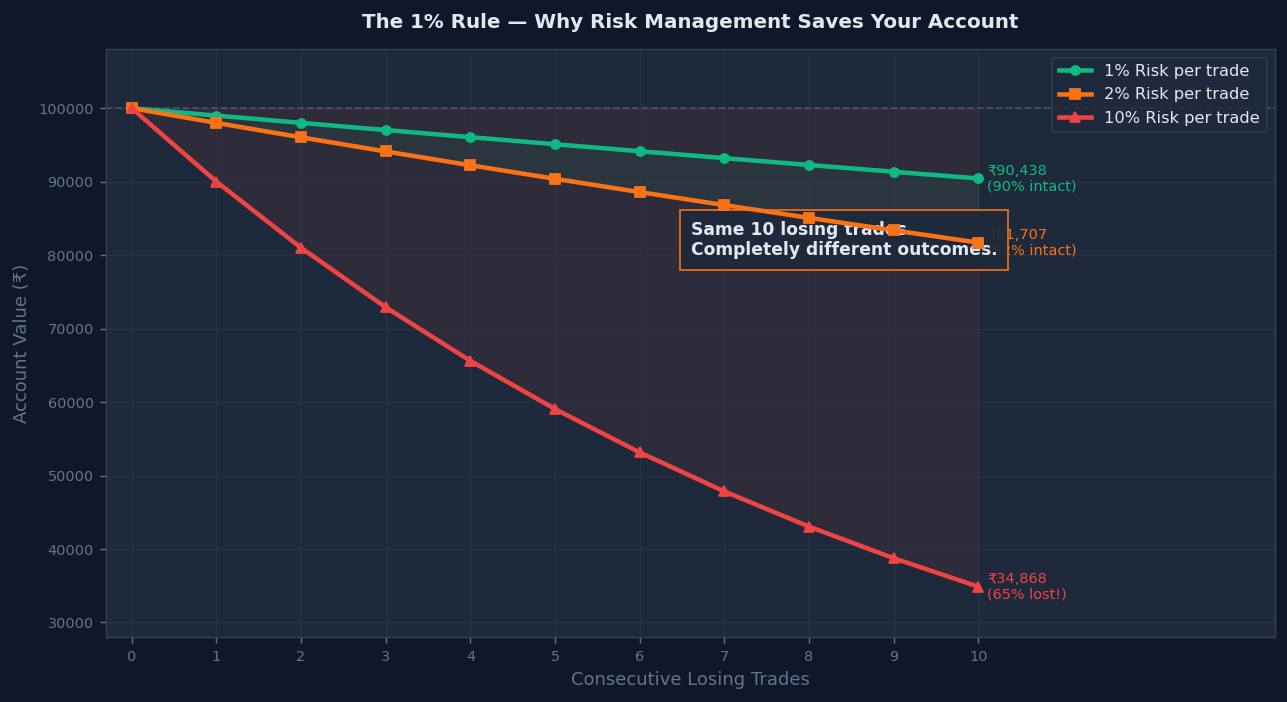
Professional traders usually risk only:
- 1%
- 2%
of their total trading capital per trade.
Example #
| Account Size | 1% Risk | 2% Risk |
|---|---|---|
| $1,000 | $10 | $20 |
| $10,000 | $100 | $200 |
| $50,000 | $500 | $1,000 |
Importance of Stop Loss #
A stop loss protects traders from large unexpected losses.
Trading without a stop loss can destroy an account during high volatility or emotional trading.
Good Stop Loss Placement #
Place stop loss:
- Below support in long trades
- Above resistance in short trades
- Below market structure
- Based on volatility
Avoid random stop loss placement.
Risk Reward Ratio (RRR) #
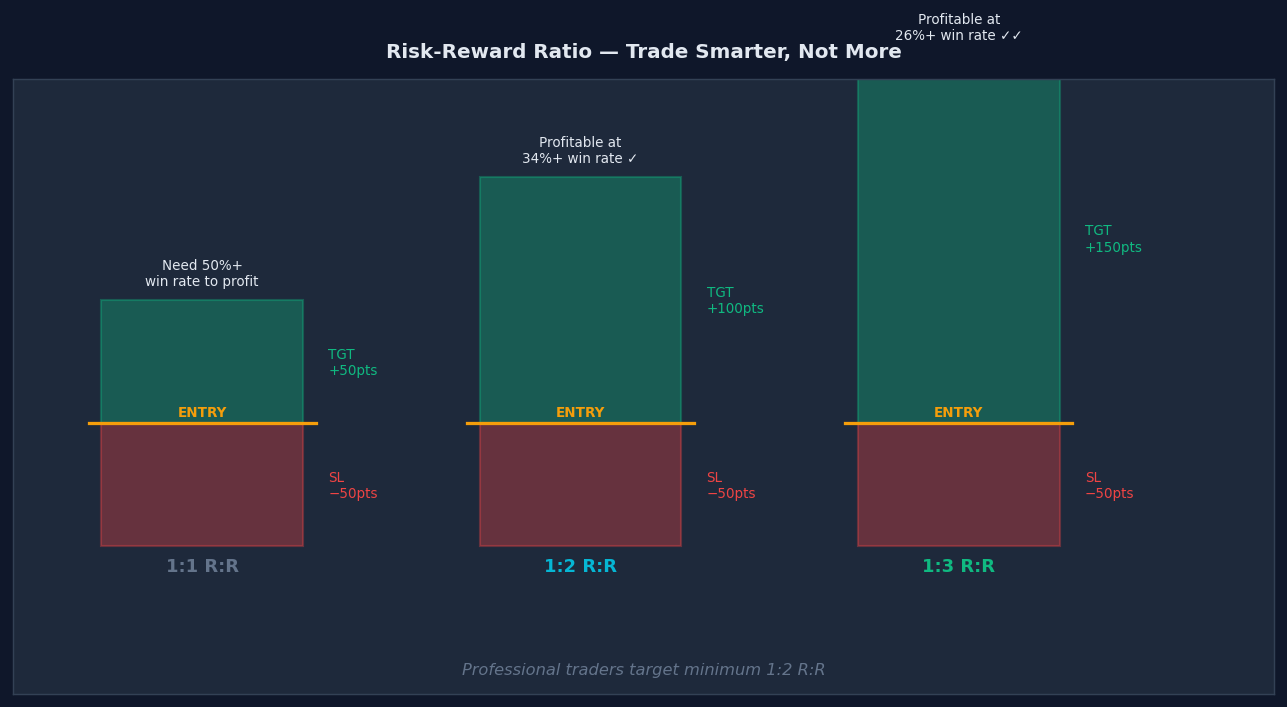
Risk Reward Ratio measures how much profit is expected relative to risk.
A trader with proper Risk Reward can remain profitable even with a lower win rate.
Common Professional Targets
| Risk | Reward |
|---|---|
| 1 | 2 |
| 1 | 3 |
Position Sizing #
Position sizing determines how much quantity to trade based on account risk.
Formula #
Position Size = (Account Balance × Risk %) ÷ Stop Loss
Example #
| Account | Risk | Stop Loss | Position Size |
|---|---|---|---|
| $10,000 | 1% = $100 | $700 (1% of BTC at $70,000) | 0.143 BTC |
Money Management #
Money management is the process of managing trading capital efficiently.
Professional traders:
- Preserve capital during losing streaks
- Increase size gradually
- Avoid over-leveraging
- Focus on consistency
Good money management reduces emotional pressure.
Compound Growth #
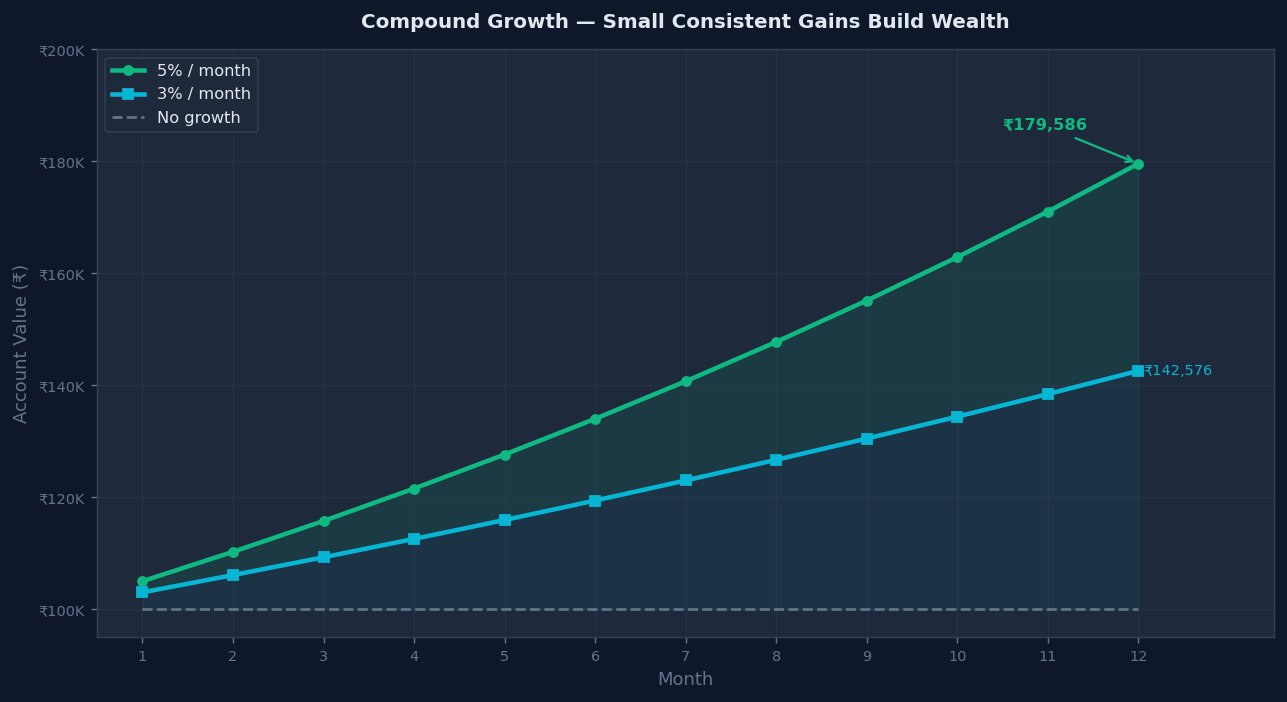
Small consistent profits can grow significantly over time through compounding.
Professional traders focus on:
- Steady growth
- Controlled risk
- Long-term consistency
instead of trying to double accounts quickly.
Overtrading #
Overtrading is one of the biggest reasons traders lose money.
Common causes:
- Revenge trading
- Fear of missing out (FOMO)
- Boredom
- Emotional decisions
Professional traders wait for high-quality setups only.
Trading Psychology #
Trading psychology refers to emotional and mental control during trading.
The market tests:
- Patience
- Discipline
- Confidence
- Emotional stability
Psychology often matters more than strategy.
Common Emotional Mistakes #
| Emotion | Result |
|---|---|
| Fear | Early exits |
| Greed | Holding too long |
| Revenge Trading | Large losses |
| FOMO | Bad entries |
| Overconfidence | Excessive risk |
Fear and Greed #
Fear causes traders to:
- Exit winning trades early
- Avoid valid setups
Greed causes traders to:
- Ignore stop loss
- Over-leverage
- Hold losing trades too long
Professional traders follow their system instead of emotions.
Revenge Trading #
After a losing trade, many traders try to recover losses immediately.
This usually leads to:
- Poor decisions
- Emotional entries
- Bigger losses
The best response after a loss is discipline and patience.
Importance of a Trading Plan #
Every professional trader follows a trading plan.
A trading plan should include:
- Entry rules
- Exit rules
- Stop loss
- Risk percentage
- Trading sessions
- Maximum daily loss
A trader without a plan is gambling.
Trading Journal #
Keeping a trading journal helps traders:
- Track mistakes
- Improve discipline
- Analyze setups
- Review performance
Professional traders constantly review and improve their execution.
Crypto Trading Psychology #
Crypto markets are highly volatile and emotional.
Common crypto trading mistakes:
- Over-leverage
- Chasing pumps
- Panic selling
- Trading without confirmation
Professional crypto traders focus on:
- Patience
- Risk management
- Position control
- Structured execution
Professional Trading Rules #
Core Rules #
- Protect capital first
- Never risk too much on one trade
- Follow your trading system
- Avoid emotional decisions
- Trade only high-quality setups
- Focus on consistency
Daily Risk Limits #
Professional traders usually stop trading after reaching:
- Daily loss limit
- Emotional instability
- Overtrading behavior
This helps preserve both capital and psychology.
Long-Term Trading Mindset #
Successful trading is not about making fast money.
It is about:
- Long-term survival
- Consistent execution
- Emotional discipline
- Controlled risk
Professional traders think in probabilities, not emotions.
The goal is consistency over years, not excitement over a few trades.
Final Thoughts #
A strong strategy without discipline will fail.
Risk management, money management, and psychology are what separate professional traders from emotional traders.
Master:
- Risk control
- Position sizing
- Emotional discipline
- Consistency
before focusing on advanced strategies.
Disclaimer #
This content is for educational purposes only.
Trading and investing involve substantial financial risk. Always do your own research and manage risk responsibly.